
What Is Hydroxyapatite?
A Complete Guide to the Mineral in Teeth, Bones, and Advanced Materials

By Kate · Reviewed by Allen · Updated October 26, 2026
Hydroxyapatite, often shortened to HAP or HAp, is a calcium phosphate mineral with the chemical formula Ca₁₀(PO₄)₆(OH)₂. It is the principal mineral component of human teeth and bones, and it is also one of the most widely used calcium phosphate materials in oral care, orthopedics, medical aesthetics, chromatography, and advanced manufacturing.
For consumers, hydroxyapatite is best known as the mineral used in fluoride-free toothpaste. For manufacturers and researchers, it is a versatile biomaterial that can be produced in different particle sizes, shapes, purities, and crystallinities to suit a specific application.
This guide explains what hydroxyapatite is, how it works in teeth and bones, the difference between nano and micro hydroxyapatite, its main industrial uses, and what buyers should check before choosing a supplier.
Quick Answer
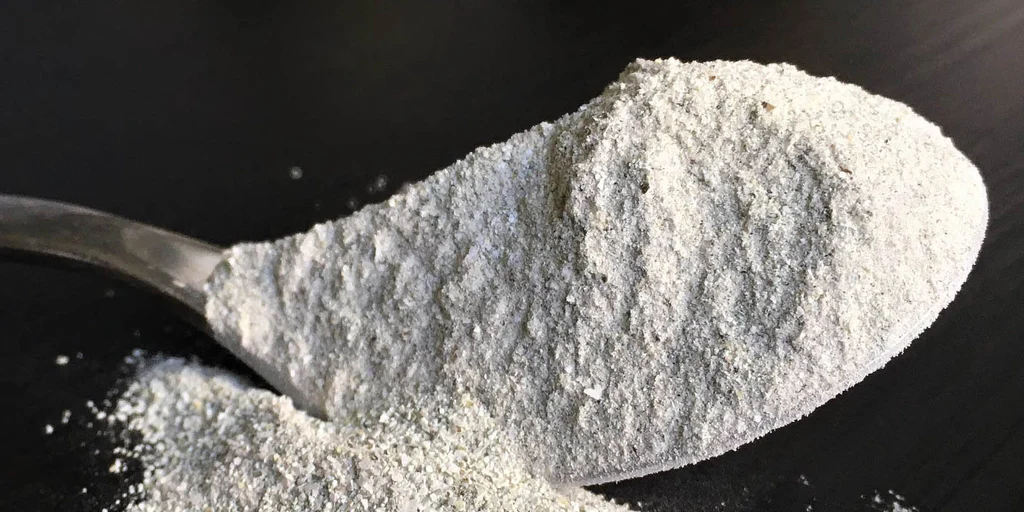
Hydroxyapatite is a naturally occurring form of calcium apatite and the main mineral that gives enamel, dentin, and bone their strength. Synthetic hydroxyapatite is manufactured as a white powder, granules, blocks, or slurry. It is used in toothpaste and mouthwash for enamel support, in bone grafts and implant coatings for biocompatibility, and in several industrial processes where calcium phosphate chemistry is useful.
Its performance depends on far more than the name on the label. Purity, calcium-to-phosphorus ratio, particle size, particle shape, crystallinity, surface area, and formulation compatibility all affect how hydroxyapatite behaves.
Key Takeaways
•Hydroxyapatite is a calcium phosphate mineral found naturally in teeth and bones.
•Synthetic hydroxyapatite can be engineered into different grades and particle sizes.
•In oral care, hydroxyapatite may support remineralization and reduce dentin sensitivity.•
•Nano-hydroxyapatite and micro-hydroxyapatite are not interchangeable.
•Clinical evidence for hydroxyapatite toothpaste is promising, but fluoride still has the longer and broader evidence base.
•Industrial buyers should evaluate purity, Ca/P ratio, particle size distribution, morphology, crystallinity, and documentation.
Hydroxyapatite at a Glance
Why Hydroxyapatite Matters in Teeth and Bones
Hydroxyapatite is a highly organized calcium phosphate crystal. In enamel, it forms a dense mineral structure that can withstand the mechanical forces of chewing while remaining sensitive to acid exposure. Enamel is approximately 96% mineral by weight, and hydroxyapatite is its primary mineral component. Dentin contains less mineral and more organic material, but hydroxyapatite still plays a central role in its structure.
Bone is a composite material. Hydroxyapatite crystals are distributed through a collagen matrix, providing stiffness and compressive strength while also acting as a reservoir for calcium and phosphate. This similarity to natural hard tissue is why synthetic hydroxyapatite is used in bone graft substitutes, implant coatings, and other orthopedic applications.
The mineral is not inert. Its surface can interact with ions, proteins, and surrounding tissue. In the body, hydroxyapatite can participate in ion exchange and release calcium and phosphate under appropriate conditions. In industrial and oral-care formulations, these surface interactions are part of why particle size and crystallinity matter so much.
Natural vs. Synthetic Hydroxyapatite
Hydroxyapatite can come from natural or synthetic sources.
Natural hydroxyapatite is commonly derived from bone or mineral sources. It may contain trace elements and biological impurities, and its composition can vary by source and processing method.
Synthetic hydroxyapatite is produced through controlled chemical processes such as precipitation, hydrothermal synthesis, or high-temperature processing. Synthetic production allows manufacturers to control:
•Calcium-to-phosphorus ratio
•Particle size and size distribution
•Crystal morphology
•Crystallinity
•Phase purity
•Surface area
•Trace element content
For oral care and medical applications, synthetic hydroxyapatite is generally preferred because its composition and physical properties can be specified and reproduced. However, “synthetic” does not automatically mean “pharmaceutical grade” or “safe for every use.” The intended application determines the required purity, testing, and regulatory pathway.
How Hydroxyapatite Works in Oral Care
Hydroxyapatite toothpaste is designed to deliver hydroxyapatite particles to the tooth surface. Several mechanisms have been proposed:
1.Surface deposition and remineralization. Hydroxyapatite particles may bind to demineralized areas of enamel and help restore mineral density.
2.Dentin tubule occlusion. Small particles can block exposed dentinal tubules, which may reduce the movement of fluid inside the tubules and ease sensitivity.
3.Plaque and biofilm interactions. Some studies suggest that hydroxyapatite may help reduce bacterial adhesion, although this effect depends on the formulation.
The clinical evidence is encouraging. A 2023 randomized, double-blind, 18-month trial in adults found that a fluoride-free toothpaste containing 10% hydroxyapatite was non-inferior to a 1,450 ppm fluoride toothpaste for caries prevention, based on the primary DMFS endpoint. In the per-protocol analysis, 89.3% of participants using the hydroxyapatite toothpaste had no increase in DMFS, compared with 87.4% in the fluoride group.
That does not mean hydroxyapatite has replaced fluoride as the best-established cavity-prevention ingredient. Systematic reviews note that the number of long-term clinical trials is still limited, several studies have a high risk of bias, and some research has been funded by product manufacturers. The evidence is promising, but it should be interpreted with appropriate caution.
People at high risk of cavities, those with active decay, and anyone with a complex dental condition should discuss toothpaste selection with a dentist rather than switching products solely on the basis of marketing claims.
Nano-Hydroxyapatite vs. Micro-Hydroxyapatite
Particle size is one of the most important differences between hydroxyapatite products.
Nano-hydroxyapatite is not automatically superior to micro-hydroxyapatite. Performance depends on the complete formulation, the delivered dose, particle morphology, dispersion, and the condition being addressed.
The widely studied oral-care concentration is often around 10% hydroxyapatite, but formulations vary. Buyers should ask for the concentration basis, particle-size distribution, and evidence specific to the exact material being supplied.

Main Applications of Hydroxyapatite
1. Toothpaste and Mouthwash
Hydroxyapatite is used in fluoride-free and fluoride-containing oral-care products. Formulators select a grade based on particle size, purity, compatibility with surfactants and thickeners, and the intended marketing or clinical claim.
2. Bone Graft Substitutes and Bone Cement
Porous hydroxyapatite granules and blocks are used in bone repair because of their biocompatibility and osteoconductive properties. Key specifications include porosity, pore size, phase purity, mechanical strength, and resorption behavior.
3. Implant Coatings
Hydroxyapatite coatings can be applied to metal implants to improve bone contact. Coating performance depends on powder flowability, particle-size distribution, crystallinity, and process control.
4. Medical Aesthetics
Calcium hydroxyapatite microspheres are used in some injectable aesthetic products. Here, particle size, shape, uniformity, and sterility are critical.
5. Chromatography
Hydroxyapatite is used as a chromatography medium for separating proteins and other biomolecules. Surface area, porosity, and chemical purity are important.
6. Soil Remediation
Hydroxyapatite can help immobilize heavy metals in contaminated soil and water. Reactivity, particle size, and cost efficiency are the main considerations.
7. 3D Printing and Composite Materials
Hydroxyapatite powders are used in composite filaments, scaffolds, and binder-based printing processes. Flowability, particle size, and thermal behavior affect printability and final material properties.
What to Check When Buying Hydroxyapatite Powder
Hydroxyapatite is not a single commodity with one universal specification. Two products with the same chemical name can behave very differently.
Before requesting a quotation, confirm the following:
Purity: What is the minimum assay, and which trace elements are controlled?
Calcium-to-phosphorus ratio: Is it close to the stoichiometric value of 1.67?
Particle-size distribution: Request D10, D50, and D90 rather than an average alone.
Particle morphology: Is the material rod-shaped, needle-shaped, spherical, or irregular?
Crystallinity: How crystalline is the material, and what phase composition is present?
Phase purity: Is the product hydroxyapatite, or does it contain tricalcium phosphate or other calcium phosphate phases?
Surface area and porosity: These matter for adsorption, chromatography, and bone applications.
Moisture and loss on ignition: Important for consistent formulation and processing.
Heavy metals and microbial limits: Required for cosmetic, oral-care, and medical grades.
Documentation: Ask for a Certificate of Analysis, technical data sheet, safety data sheet, and relevant regulatory information.
Batch consistency: Can the supplier reproduce the same specification from lot to lot?
Customization: Can particle size, surface treatment, or packaging be adapted to your process?
Is Hydroxyapatite Safe?
Safety depends on:
▪Particle size and shape
▪Surface coating or modification
▪Route of exposure
▪Concentration
▪Manufacturing purity
▪Intended use and regulatory classification
In 2025, the European Commission’s Scientific Committee on Consumer Safety published an updated opinion on nano-hydroxyapatite. Under the specific particle characteristics assessed, the committee considered nano-hydroxyapatite safe at concentrations up to 29.5% in toothpaste and 10% in mouthwash. This is a scientific safety opinion, not a universal authorization for every product or market. Formulators must still comply with the regulations that apply in their target country.
Medical applications such as bone grafts and injectable products require separate regulatory review. Powder handling also requires appropriate dust controls, because inhalation of fine particulate materials should be avoided.
Frequently Asked Questions
What is hydroxyapatite made of?
Hydroxyapatite is composed of calcium, phosphate, and hydroxide ions. Its formula is Ca₁₀(PO₄)₆(OH)₂.
Is hydroxyapatite the same as fluoride?
No. Fluoride is an ion that helps enamel resist acid and form fluorapatite. Hydroxyapatite is the calcium phosphate mineral that makes up tooth and bone tissue. The two materials work through different mechanisms and can be used in different formulations.
Is nano-hydroxyapatite safe for toothpaste?
Regulatory and scientific assessments have generally supported the use of specified nano-hydroxyapatite grades in oral care. Safety depends on particle characteristics, concentration, and compliance with local requirements. Consumers should use products from manufacturers that provide clear specifications and follow the label.
Does hydroxyapatite whiten teeth?
Hydroxyapatite is not a bleaching agent. It may improve the appearance of enamel by depositing mineral on the surface and smoothing microscopic irregularities, but it should not be compared to hydrogen peroxide-based whitening treatments.
Can hydroxyapatite replace fluoride?
For some users and formulations, hydroxyapatite toothpastes have shown caries-preventive effects comparable to fluoride in clinical trials. Fluoride still has the larger and longer-established evidence base. The appropriate choice depends on individual cavity risk and professional advice.
What is the best particle size for hydroxyapatite toothpaste?
There is no single “best” size. Nano and micro grades can both be used. The right choice depends on the intended mechanism, concentration, formulation, stability, and regulatory requirements.
Is synthetic hydroxyapatite vegan?
Synthetic hydroxyapatite is generally produced from mineral or chemical precursors and is not derived from animal bone. Buyers should confirm the source and any certification claims with the supplier.
Conclusion
Hydroxyapatite is much more than a trending toothpaste ingredient. It is a fundamental calcium phosphate mineral with applications spanning oral care, bone repair, implant coatings, medical aesthetics, chromatography, soil remediation, and advanced manufacturing.
Its performance is determined by material specifications, not just the chemical name. Purity, Ca/P ratio, particle size, morphology, crystallinity, and documentation all influence how hydroxyapatite will behave in a finished product.
At AXK, we supply hydroxyapatite materials in multiple particle sizes and product forms for oral care, bone, 3D printing, coatings, and other applications. Request a sample or specification sheet to discuss the right grade for your project.